
Đào tạo & nghiên cứu
H. pylori: Pathogen Causing Gastric Ulcers and the State of Antibiotic Resistance
11 Tháng 06, 2026
162 Views
H. pylori: Pathogen Causing Gastric Ulcers and the State of Antibiotic Resistance
Van Hung Pham1,2*, Thao Kieu thi Le2, Luan Duy Phan2, Huy Van Bui2,
Nguyen Cao Doan2, Nga Quynh Thi Vu2, Cuong Kim Do2, Huong Thien Pham1,2,3
1Vietnam Research and Development Institute of Clinical Microbiology, Ho Chi Minh city 70000, Vietnam; 2NK-Biotek Co.;
3Pham Ngoc Thach University of Medicine, Ho Chi Minh city 70000, Vietnam
BACKGROUND
H. pylori is the causative microorganism of peptic ulcers, therefore several antibiotics have been recommended for treatment. However, in Vietnam, a significant rate of resistance to some of these antibiotics has been observed and reported[1,2,3]. Therefore, data identifying the resistance status of these antibiotics and the virulence factors of H. pylori are essential to help physicians assess the disease risk and select the appropriate treatment options for the patients
AIMS OF THE STUDY
This study aims to determine the prevalence of the Helicobacter pylori infection using the culture methods for isolation and evaluation of its antibiotic resistance patterns. Additionally, this study utilizes real-time PCR to detect the VacA and CagA genes of H. pylori to determine its virulence, and to identify CYP2C19 genotypes of the infected patients to help the physicians use the correct dosage of PPIs.
MATERIALS AND METHODS
A cross-sectional study was conducted on gastric biopsy samples submitted to the NK-Biotek Laboratory from March 2023 to March 2025. Helicobacter pylori bacteria were detected by using the culture and the real-time PCR. With the culture method, antibiotic susceptibility of H.pylori isolates was detected by using the minimum inhibitory concentration (MIC) determination method for following antibiotics including amoxicillin, clarithromycin, levofloxacin, metronidazole, and tetracycline. In addition to the culture method, DNA from the gastric biopsy samples was automatically extracted in the NKEXTRACTOR instrument using the NKDNA/RNAprep MAGBEAD kit. The extracted DNA were added to the PCR tubes containing MPL real-time PCR (MPL-rPCR) mixes to detect the VacA/CagA genes of H. pylori presented in the samples and also to determine the patient’s CY2C19 genotype. The real-time PCR program was performed in the Biorad CFX96 machine.
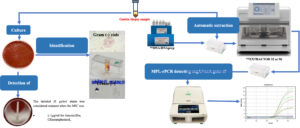
Picture 1: The methods to culture the H. pylori from the gastric biopsy samples collected from patients and to detect the antibiotic resistances of the isolated H. pylori by MIC detection method
RESULTS
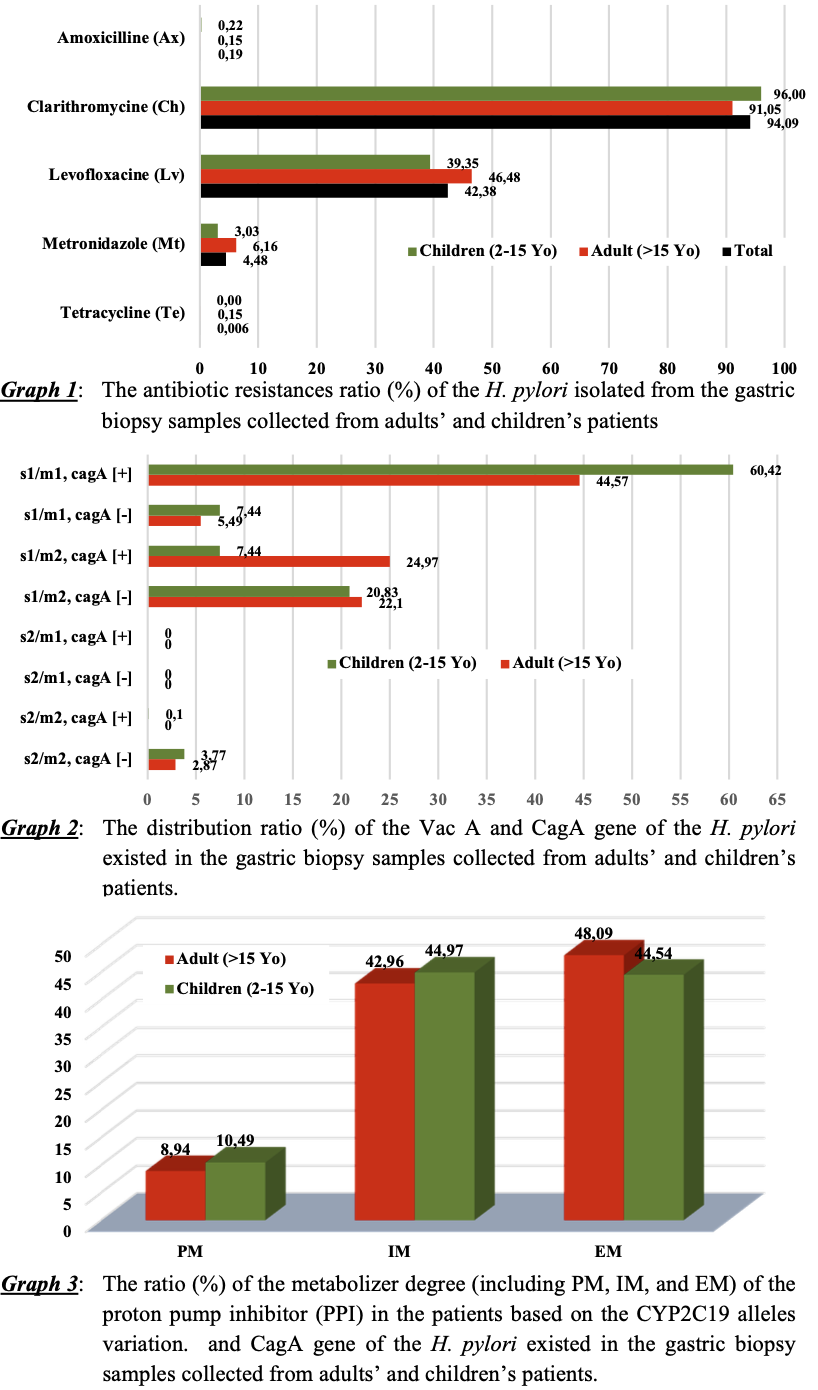
From March 2023 to March 2025A, 2,056 gastric biopsy samples were submitted to NK-Biotek Laboratory. H.pylori were detected by culture in 1,607 (78.16%) and by MPL real-time PCR in 1809 (87.99%) samples. Antibiotic susceptibility results of the isolated H. pylori were: Resistance rates to clarithromycin, levofloxacin, and metronidazole were 94.1%, 61.1%, and 4.5%, respectively, while resistance to amoxicillin and tetracycline was low (0.2% and 0.06%). Among children (≤15 years), resistance to clarithromycin and levofloxacin reached 96.0% and 39.4%. Resistant strains showed MICs ranging from 1 to 6 μg/mL. The distribution of the vacAs1/m1, cagA[+] gene was high in children (60.42%), while adults had a lower s1/m1, cagA[+] rate (44.57%). The CYP2C19 genotypes in the two groups of subjects (children and adults) were: EM (44.54% and 48.09%); IM (44.97% and 42.96%); PM (10.49% and 8.94%).
DISCUSSIONS AND CONCLUSION
Using culture and MPL-rPCR techniques performed at the NK-Biotek laboratory, the detection rate of H. pylori in gastric biopsy samples taken from patients clinically diagnosed as peptic ulcers causing by Helicobacter pylori infection showed a relatively high presence of H. pylori. The test results also revealed a very high resistance rate of H. pylori to clarithromycin and levofloxacin. This finding explains the many clinical failures in the antibiotic treatment. Furthermore, the study also identified the distribution of vacA and cagA genotypes, as well as the variability of PPIs metabolized in patients by detection the variation of CY2C19 genotype. These results provide essential information for therapists to assess risks and determine appropriate treatment solutions.
KEY WORDS
H.pylori, CYP2C19, multiplex real-time PCR (MLP-PCR).

Picture 2: The methods of the MPL-rPCR to detect the cagA/vacA gene of the H. pylori existing in the gastric biopsy samples and the allene modifications the CYP2/C19 of the patients
REFERENCES
1. Khien V, Thang D, Hai T, Duat N, Khanh P, Ha D, et al. Management of antibiotic-resistant Helicobacter pylori infection: Perspectives from Vietnam. Gut and Liver. (2019) 13:483–97. 10.5009/gnl18137
2. Quach D, Vilaichone R, et al. H. pylori infection and related gastrointestinal diseases in southeast asian countries: An expert opinion survey.Asian Pac J Cancer Prev. (2018) 19:3565–9. 10.31557/APJCP.2018.19.12.3565.
3. Binh TT, Shiota S, Nguyen LT, et al. The incidence of primary antibiotic resistance of Helicobacter pylori in Vietnam. J Clin Gastroenterol. 2013 Mar;47(3):233-8. doi: 10.1097/MCG.0b013e3182676e2b. PMID: 23090037; PMCID: PMC3556356.
Tin liên quan
Liên kết


Địa chỉ: 793/ 58 Trần Xuân Soạn, phường Tân Hưng, Quận 7, TP. Hồ Chí Minh
Email:visinhlamsang.vcm@gmail.com
Sđt: 0903.698.920
Copyright 2024 Vietnam Research and Development Institute of Clinical Microbiology