
Đào tạo & nghiên cứu
Disease Burden and Subgroup Replacement of Respiratory Syncytial Virus (RSV) within the Respiratory Virome Landscape: A 24-Month Surveillance of Hospitalized Patients in Vietnam (2024–2025) Using Multiplex Real-time PCR Assay
15 Tháng 06, 2026
258 Views
Disease Burden and Subgroup Replacement of Respiratory Syncytial Virus (RSV) within the Respiratory Virome Landscape: A 24-Month Surveillance of Hospitalized Patients in Vietnam (2024–2025) Using Multiplex Real-time PCR Assay
Van Hung Pham1,2*, Anh Hong Pham1,2,3, Duy Khanh. Tran1,2, Huong Thien Pham1,2,4, Quang Duy Ha1,2
1Vietnam Research and Development Institute of Clinical Microbiology, Ho Chi Minh City 70000, Vietnam; 2NK-Biotek Co.;3International University, Vietnam National University, Ho Chi Minh City 70000, Vietnam; 4Pham Ngoc Thach University of Medicine, Ho Chi Minh City 70000, Vietnam
BACKGROUND
Respiratory Syncytial Virus (RSV) is one of the primary causes of acute respiratory infections worldwide; yet its impact on the broader respiratory pathogens during subgroup replacement events is inadequately comprehended. A comprehensive assessment of this viral dominance is required in Vietnam due to seasonal surges and altering lineages
AIMS OF THE STUDY
This study aims to quantify the ecological impacts of the transition of RSV subgroups in the respiratory system of hospitalized patients.
MATERIALS AND METHODS
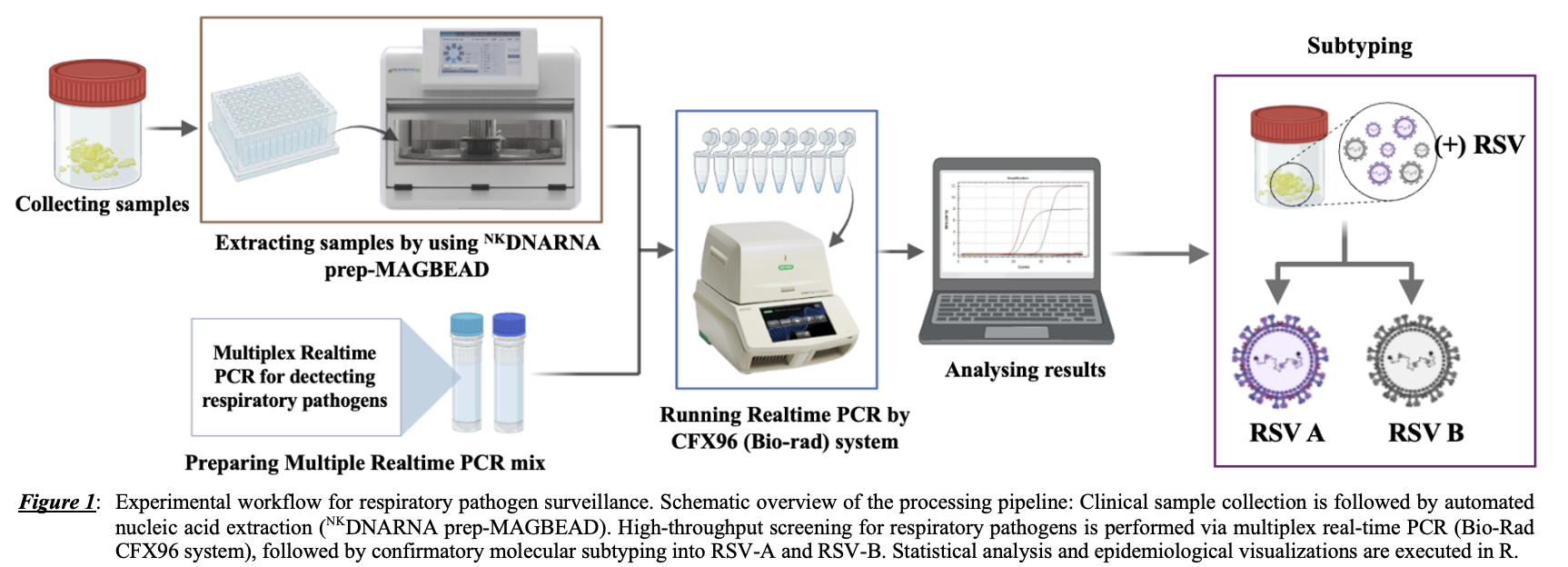
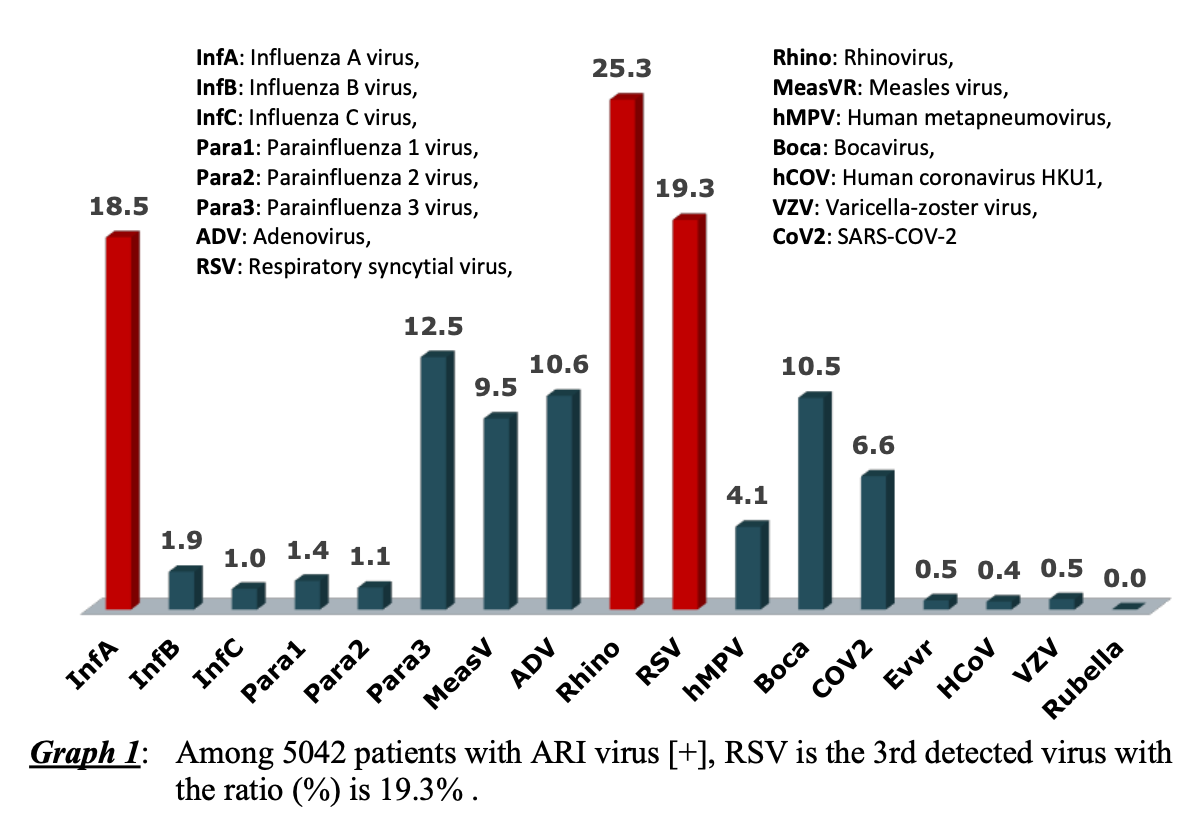
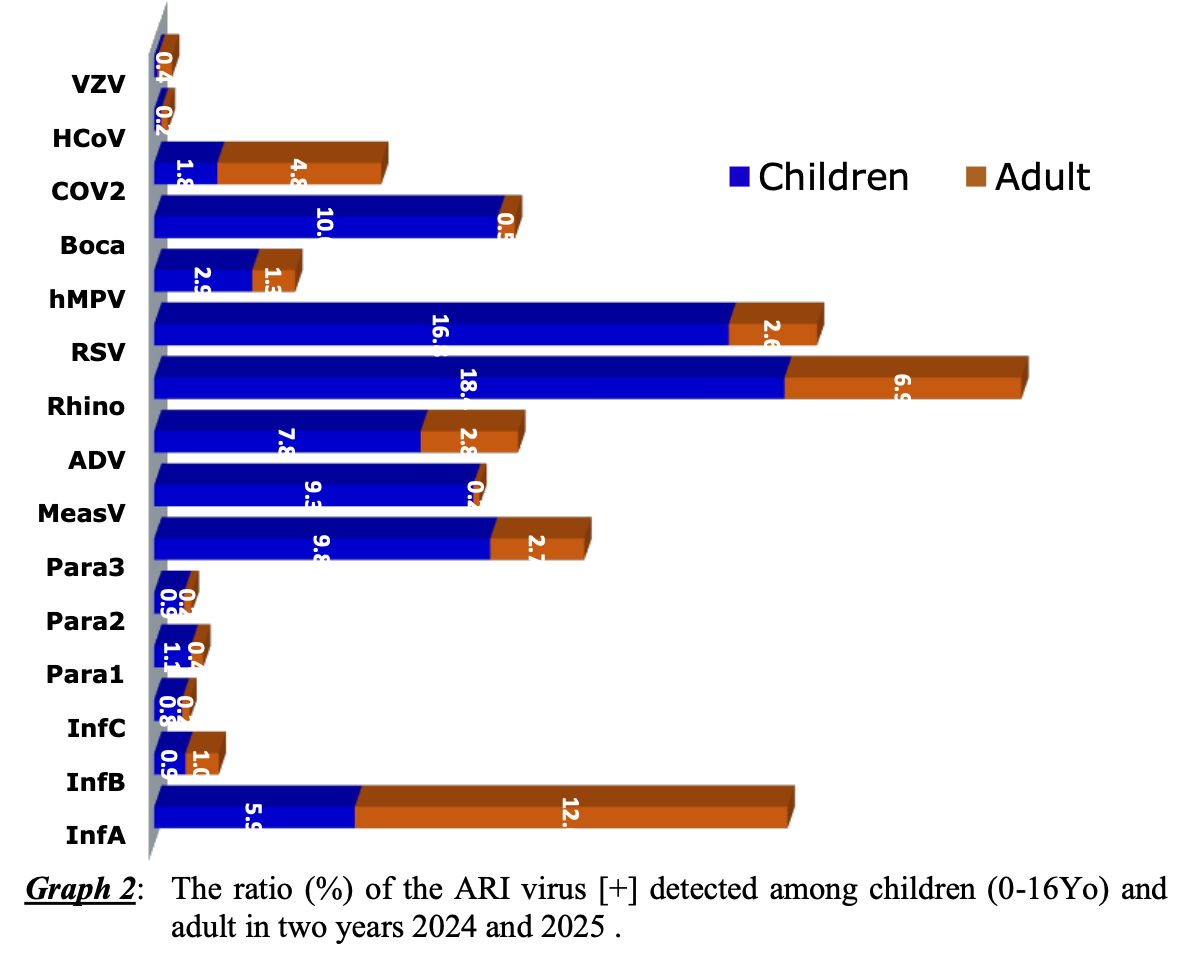
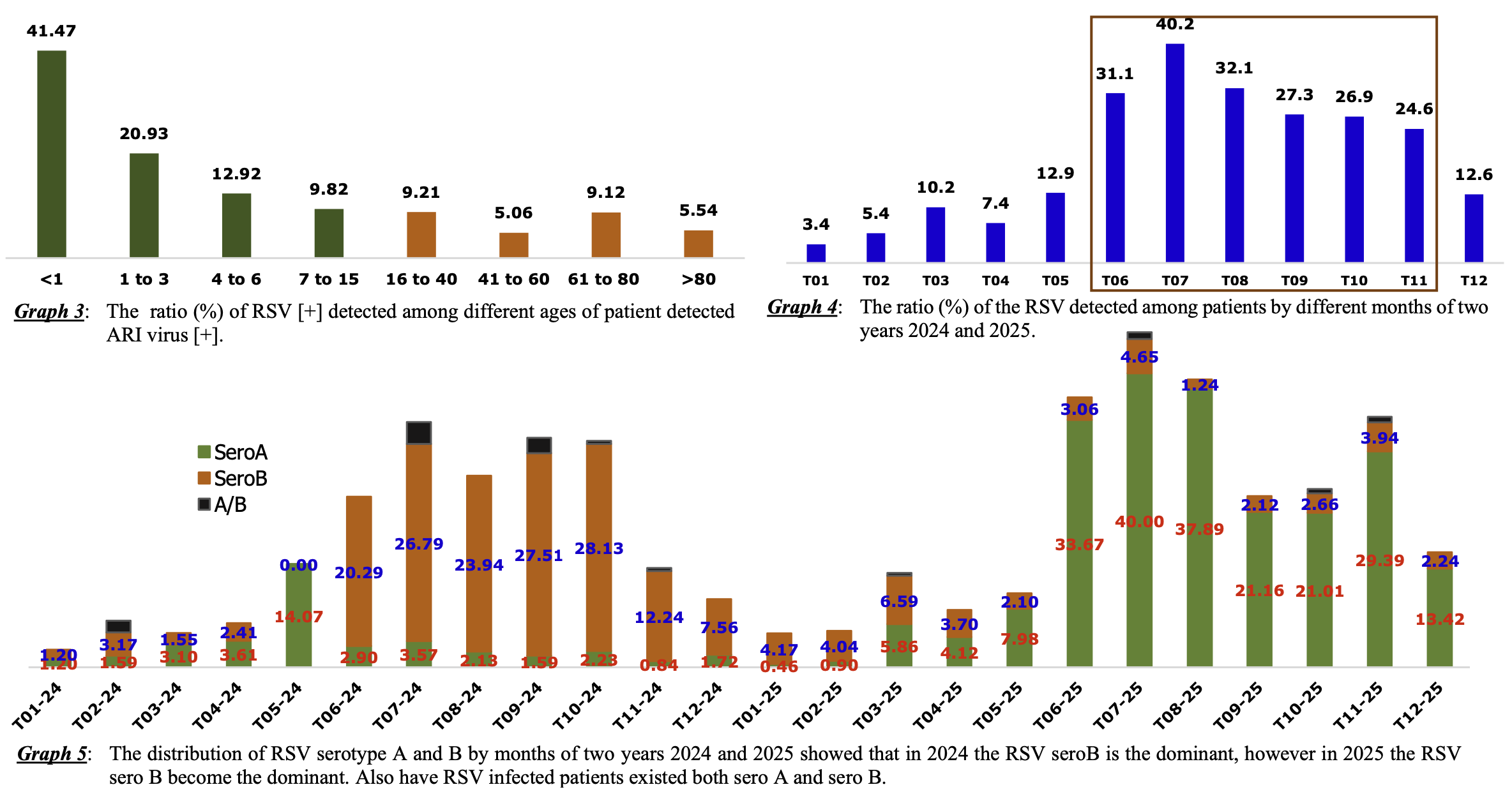
We conducted a 24-month prospective, multicenter surveillance (2024–2025) involving 5042 patients hospitalized with respiratory virus-positive infections across Vietnam. Viral pathogens and the RSV serotype (RSV-A/B) detecting were performed using a multiplex real-time PCR assay developed by the Vietnam Research and Development Institute of Clinical Microbiology (VCM)[1]. The data visualization and statistical significance for categorical variables was determined using R software. Information on the distribution of RSV by age, by month of the year, was also analyzed.
RESULTS
DISCUSSIONS AND CONCLUSION
The shift to RSV-A predominance in Vietnam is marked by an increased significant effect on the respiratory ecology. While infants represent the most vulnerable demographic in terms of quantity, the elderly face an extremely complicated microbial environment during peak seasons. These findings highlight the necessity for genotype-specific surveillance and age-stratified management methods in hospital environments to minimize the multifaceted burden of RSV

REFERENCES
1. Fu, Y.-C., Lai, T., Su, Y.-H., Lin, Y.-C., Tu, C.-Y., Chen, C.-L., & Hsueh, P.-R. (2025). High bacterial coinfection rates and associated mortality among hospitalized older adults with laboratory-confirmed respiratory syncytial virus infection. Journal of Microbiology, Immunology and Infection, 58(4), 422– 428. https://doi.org/10.1016/j.jmii.2025.03.005
2. Torres, A. R., Gaio, V., Melo, A., Lança, M., Barreto, M., Gomes, L., Azevedo, I., Bandeira, T., Lito, D., Guiomar, R., & Rodrigues, A. P. (2025). RSV-Bacterial Co-Infection Is Associated With Increased Illness Severity in Hospitalized Children—Results From a Prospective Sentinel Surveillance Study. Journal of Medical Virology, 97(2), e70209. https://doi.org/10.1002/jmv.70209
3. Pham, H. T., Pham, V. H., Tran, D. K., Tran, N. H. T., Nguyen, T. H. T., Pham, A. H., Ha, Q. D., Tran, N. V., Nguyen, N. V., Nguyen, T. V., Nguyen, D. N. T., Vo, C. D., Quek, C., & Pham, S. T. (2026). Unmasking Viral Causes of Hospitalized Respiratory Infection: Five Years of Respiratory Virus Surveillance in Vietnam by Multiplex Real-Time PCR Assay. Viruses, 18(2), 153. https://doi.org/10.3390/v18020153
Tin liên quan
Liên kết


Địa chỉ: 793/ 58 Trần Xuân Soạn, phường Tân Hưng, Quận 7, TP. Hồ Chí Minh
Email:visinhlamsang.vcm@gmail.com
Sđt: 0903.698.920
Copyright 2024 Vietnam Research and Development Institute of Clinical Microbiology